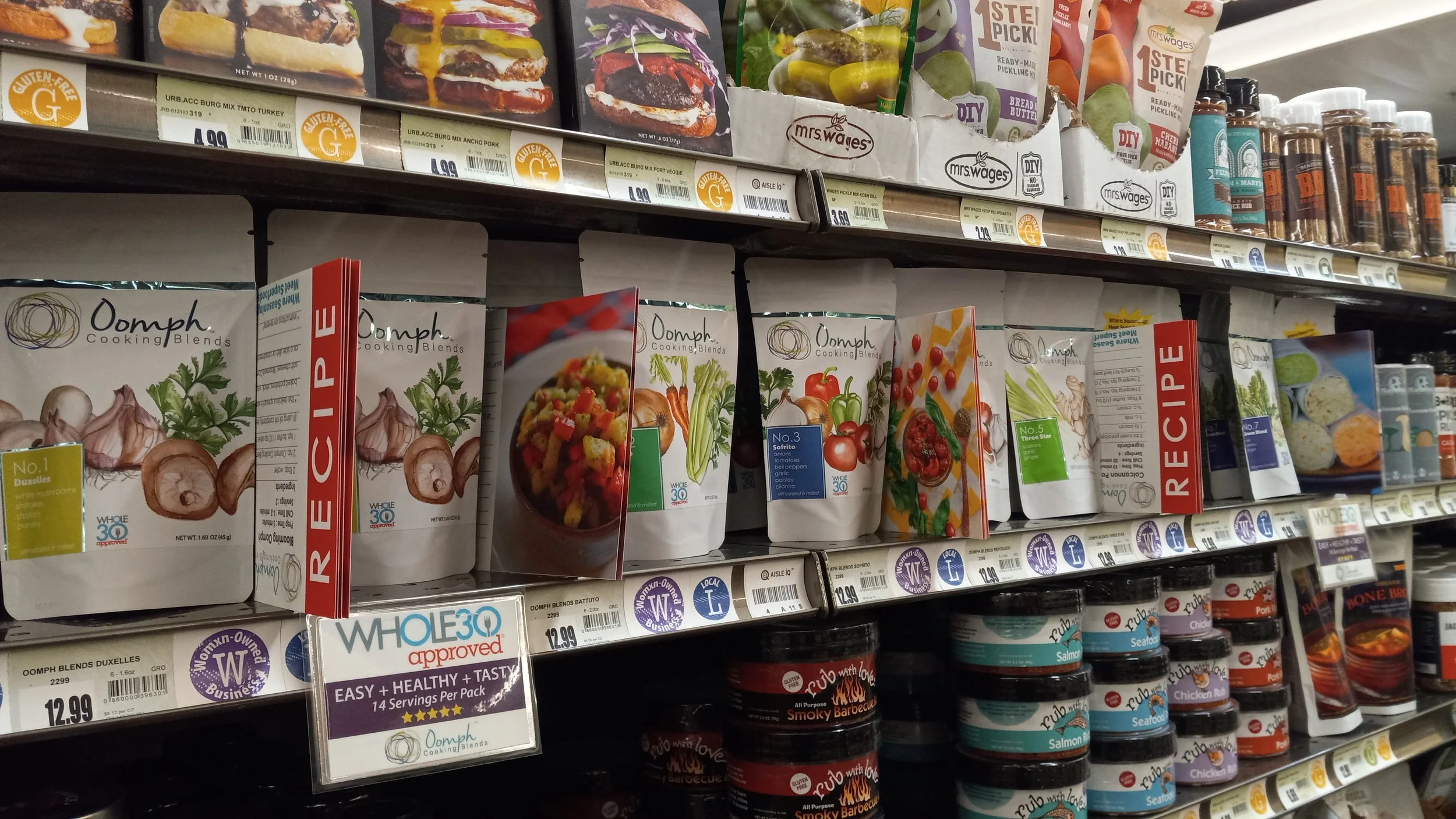
Oomph Cooking Blends
An innovative way to boost flavor and nutrition. I co-founded Oomph and built it end-to-end, testing every step with real customers.
Project facts
Role: CEO and Co-Founder
What we made: Dehydrated and milled vegetables and herbs combined into flavor profiles. That give everyday cooking a huge flavor and nutritional boost.
I owned: Product development, packaging design, manufacturing, supply chain, brand, marketing, customer experience, and sales
Reach: 30+ retail stores, 10 weekly farmers’ markets, national online sales
Years: 2015 to 2023
Oomph was selected for two highly competitive accelerators: Starve Ups Scalerator and Shopify for Startups.

Delicious and delightful - flavor made easy.
The challenge
People want to eat more vegetables, but busy weeknights get in the way. Oomph was our answer: real vegetables and herbs, dried and milled into blends you can stir into almost anything.
The catch: it was a new category. Shoppers didn't have a mental model for it, and stores didn't have a shelf for it. We had to prove people wanted it, explain it in seconds, and make it at a price that worked.
Pull quote (callout box): "When you create a new category, every customer conversation is research."
My role
As CEO and co-founder, I made the calls a founder makes: what to build, who it's for, how to make it, how to sell it, and when to change course. I designed the product and packaging, built the brand, ran manufacturing and the supply chain, and sold it face to face.
The Approach and Process
The farmers market as a research lab
We started at farmers markets, where every weekend was a round of user testing. We tested flavors, names, packaging, messaging, and price directly with shoppers, and changed what didn't land.
Image: a market booth photo [caption: "Every weekend was a round of user testing."]
Designing for a new category
[Add 1 or 2 sentences about a specific design decision, for example how packaging or naming helped shoppers understand a new kind of product in seconds.]
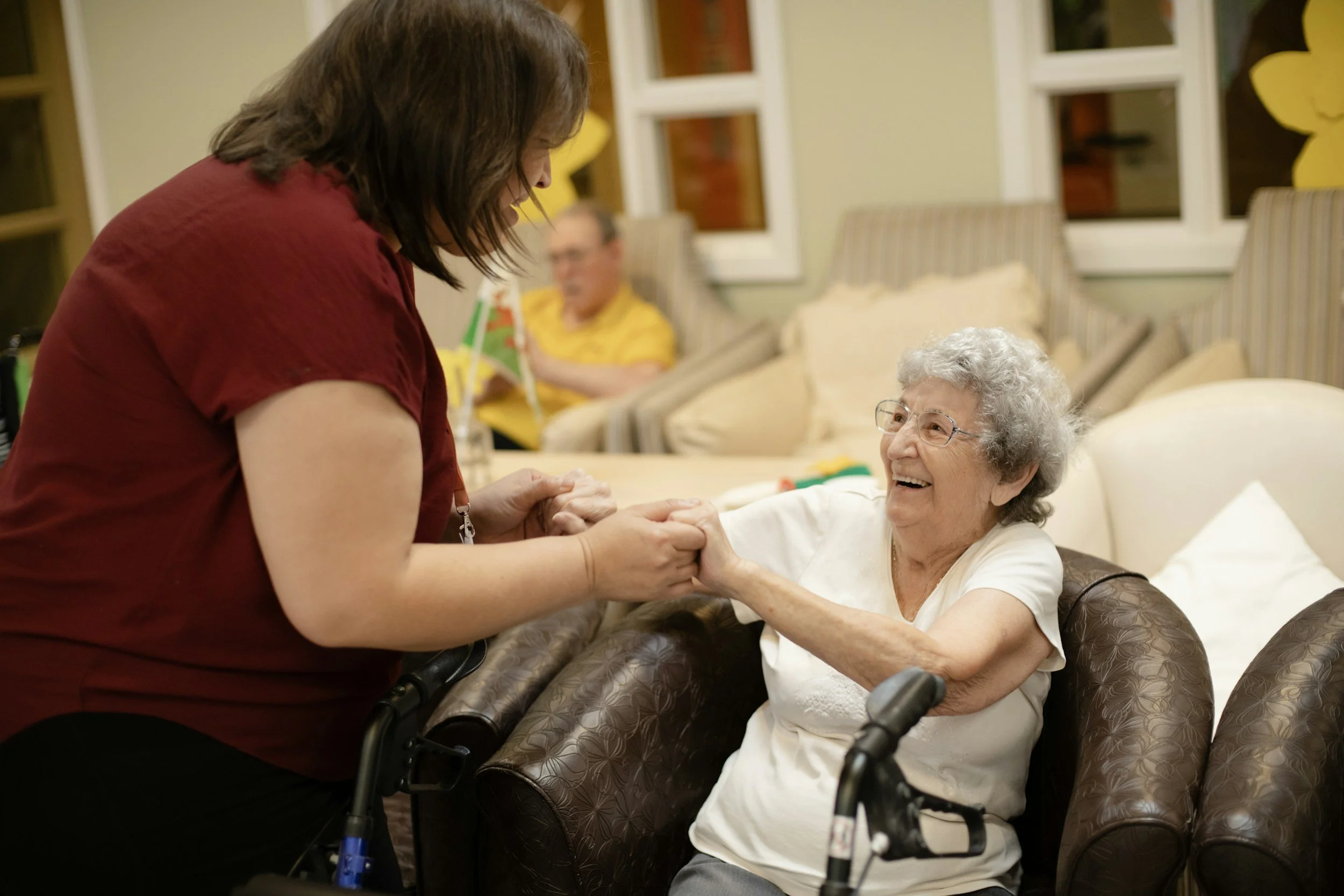
“How might we invite participation to meet the needs of professional caregivers emotionally while at work?”
Why a wheel
Turning a ring is quick and a little playful, which lowers the stakes. Leaders could try combinations they'd never have written down, compare them, and keep the ones worth exploring. The physical object also gave the room something to point at and talk about together.
Building the digital version
I rebuilt the wheel so it works in remote sessions and on a shared screen, and so anyone can fill it with words from their own project.
Spin and snap: drag a ring, tap a segment, or use the arrow keys. The live question updates as you turn.
Shuffle and lock: lock the ring you care about, such as People, then shuffle the rest for fresh combinations.
A board for the best questions: save, star and copy them as a list to bring into the next workshop.
Make it yours: edit any ring with your own project's words.
Accessible by design
Every action works by keyboard. Screen readers announce the updated question, the tool respects reduced-motion settings, and the text meets WCAG AA contrast.
Outcome
Sharper starting points: leaders framed the work around people and needs before discussing solutions.
A shared language: Action, People, Experience and Context gave teams a simple way to check whether a question was complete.
A tool that lasted: I still use this framing in workshops today, and the digital version makes it easy to run remotely.
What I learned
The quality of the answer depends on the quality of the question. A simple, tangible tool can change how a room of senior leaders thinks, because it makes slowing down feel like play instead of a delay.
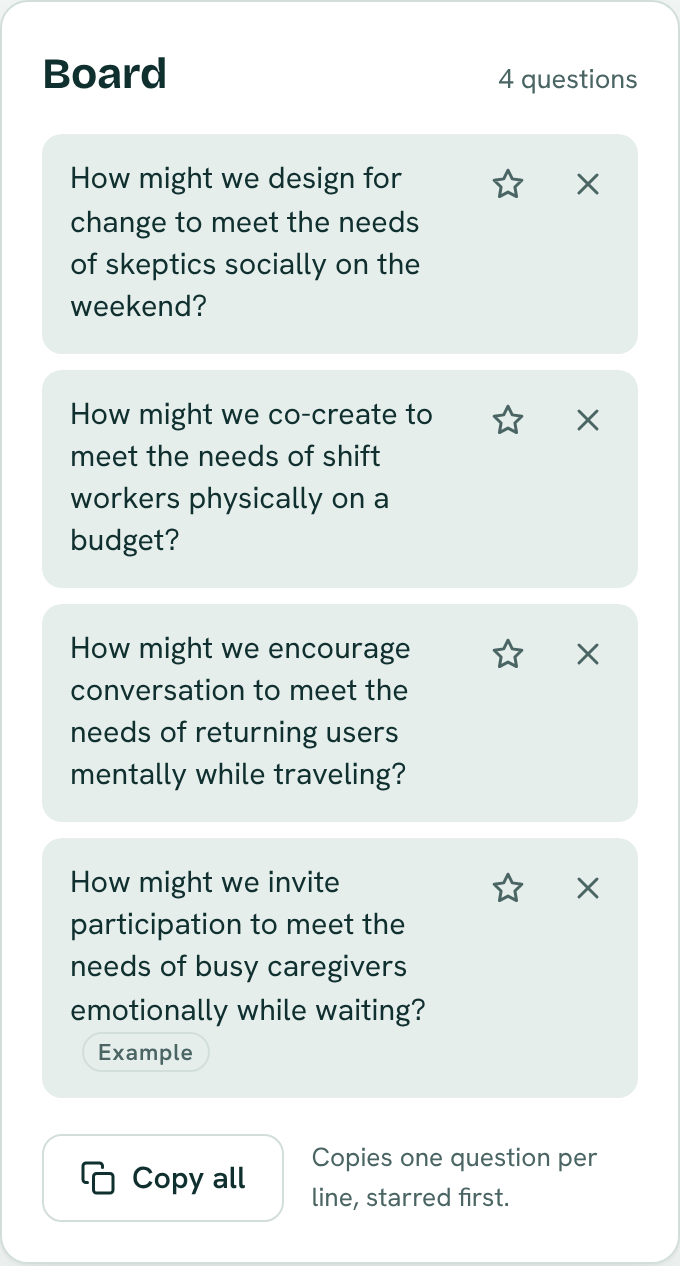
Save the How might we questions or statements on the Board for download or sharing.